
A multi-tenant ERP for three cutting-tool manufacturers Zoho could not hold.
Three cutting-tool manufacturers in Mumbai outgrew Zoho. We built CFX, a custom multi-tenant ERP on AWS with a dedicated Android sales app and Gemini AI integration.

Physical ledger replaced with a structured ERP. Every sale captured digitally. The slip system retired in favour of a system the founder can actually read.
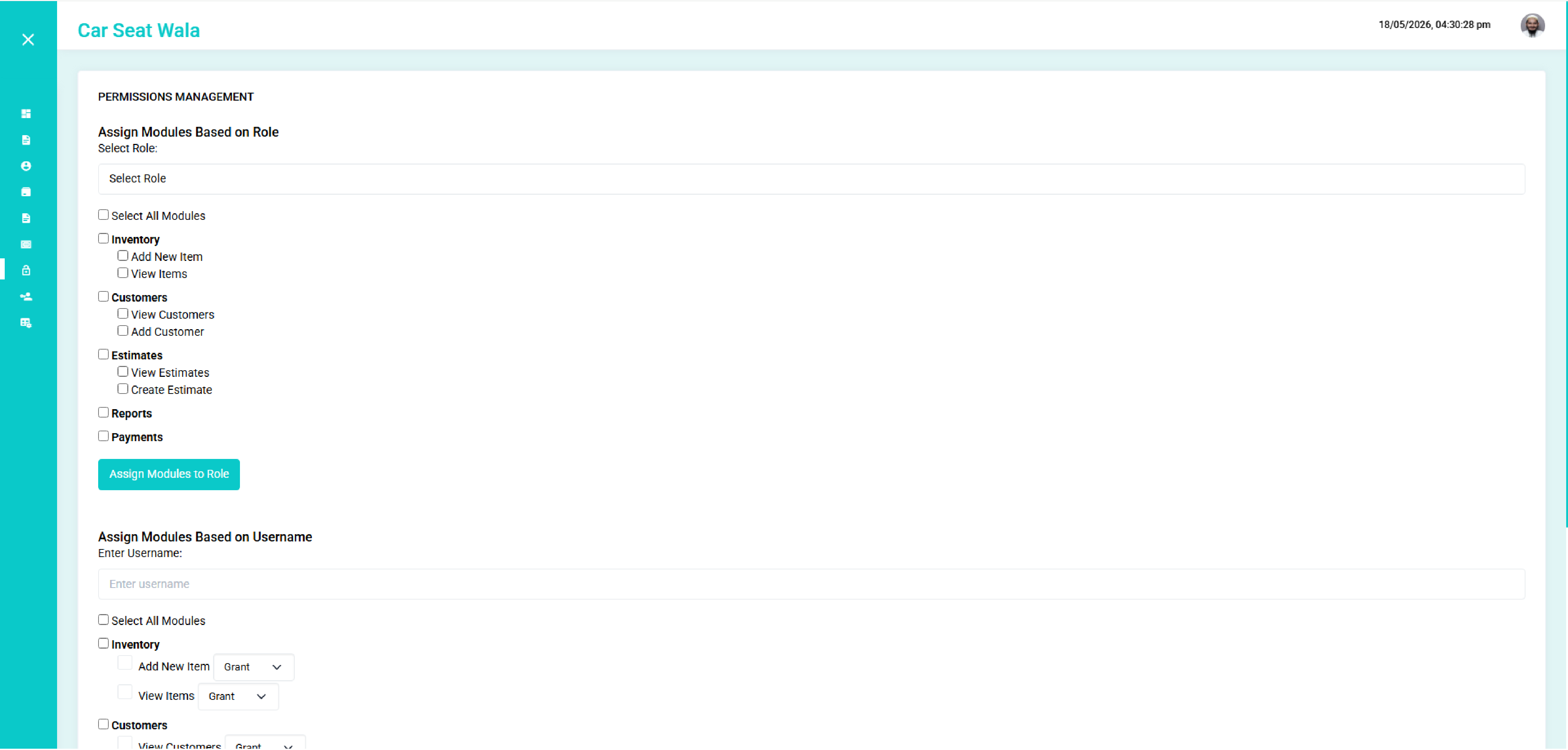
Car Seat Wala is a vendor of car seats and accessories in the Indian retail market. Like many small and medium retail operations, they had run for years on a system that worked precisely because it was simple: physical books and ledgers, with handwritten entries for every sale. The handwriting was legible. The team knew the workflow. The system was reliable in the narrow sense that nothing crashed.
It was unreliable in every other sense. Reporting was impossible without sitting down with the books for hours. Errors were silent. Reconciliation between the ledger and the actual stock or cash position required disciplined effort that, as the business grew, was increasingly hard to maintain.
The brief was direct. Replace the books with a system that captures every daily sale, surfaces operational reality to the founder, and lets the team continue to do their work without being slowed down by the software.
The Indian SMB retail world depends heavily on what people in the trade call the slip system. A customer arrives, the team writes a slip, the slip is filed, periodically the slips are reconciled into a ledger, and the ledger is reviewed monthly by the founder. The system works because everyone in the operation understands their role. It fails quietly because reconciliation is manual, the data is unstructured, and the founder has no continuous visibility into what is happening.
Car Seat Wala's day-to-day was a paper operation. Customer walks in, sale happens, slip is written. Stock is depleted in the team's head, to be reconciled later. The founder, who is the only person responsible for the financial picture, would sit down periodically with the books and try to assemble a picture of what had happened.
The founder's interest in moving away from the books was not ideological. It was practical. The business had grown to a size where the manual reconciliation was becoming a bottleneck. The decisions the founder wanted to make about pricing, inventory, and category investment depended on information the books could not provide quickly.
A web ERP designed around the actual operational rhythm of a retail shop selling automotive accessories.
Every sale captured at the point of transaction. The team enters the sale into the system the way they used to write a slip, with the same speed but with structured data behind it. The customer record, the product, the price, the quantity, and any notes all sit cleanly in the system.
A persistent customer record that builds up across visits. Where the team previously had to rely on memory to recognise repeat customers, the system surfaces purchase history when needed.
Stock levels update as sales happen. The founder can see what is moving, what is sitting, and what needs to be replenished without sitting down with the books. The category-level decisions about what to stock more of and what to phase out become decisions grounded in data.
Daily, weekly, and monthly reports that summarise the operation. The financial picture is continuously visible. The reconciliation work that previously consumed the founder's monthly review is no longer needed because the data is already structured.
Discounts, returns, exchanges, and the small operational exceptions that retail produces are handled inside the system rather than through parallel processes that escape the record.
A customer walks in. The team helps them choose. The sale happens. The team enters it into the system. The customer leaves with their purchase. The system has captured everything.
At the end of the day, the founder can see the day's activity. At the end of the week, the weekly pattern. At the end of the month, the financial summary. The work that used to take a Sunday afternoon with the books to assemble is available immediately.
When the founder thinks about which categories to expand and which to trim, the data supports the conversation. When a customer comes back six months later, the team can reference their previous purchase. When inventory needs to be reordered, the system surfaces it before stockouts become customer-facing problems.
The physical books retired. The slip system retired. The reconciliation overhead retired. In their place, a structured digital record that the founder can read and that the team operates as naturally as the old workflow.
The continuous visibility into the operation is the biggest qualitative change. The founder went from a monthly summary review to a continuous operational picture. The decisions that were previously made on intuition can now be made on data, when the founder chooses to look.
The work the team does on each sale takes about the same amount of time as the old slip system. The compounding effect, over weeks and months, is that the data accumulates structurally. What used to be a paper trail that was hard to query has become a database that answers questions on demand.
The system continues to evolve based on what the founder finds most useful in operation. The relationship structure supports ongoing improvement without requiring a new procurement conversation each time.
Three cutting-tool manufacturers in Mumbai outgrew Zoho. We built CFX, a custom multi-tenant ERP on AWS with a dedicated Android sales app and Gemini AI integration.
A highly custom ERP with AI capabilities to remove manual workflows from the operation. Modules for customer management, HR, online portal automation, and custom quotations.
A comprehensive ERP for an industrial manufacturer of custom anchor bolts, flanges, and heavy hardware. Quotes to work orders to invoicing, multi-vendor RFQ, vendor and customer dashboards.
Engagements begin with a conversation. Not a pitch. A direct discussion about your operations and the visibility you are missing.