
A multi-tenant ERP for three cutting-tool manufacturers Zoho could not hold.
Three cutting-tool manufacturers in Mumbai outgrew Zoho. We built CFX, a custom multi-tenant ERP on AWS with a dedicated Android sales app and Gemini AI integration.

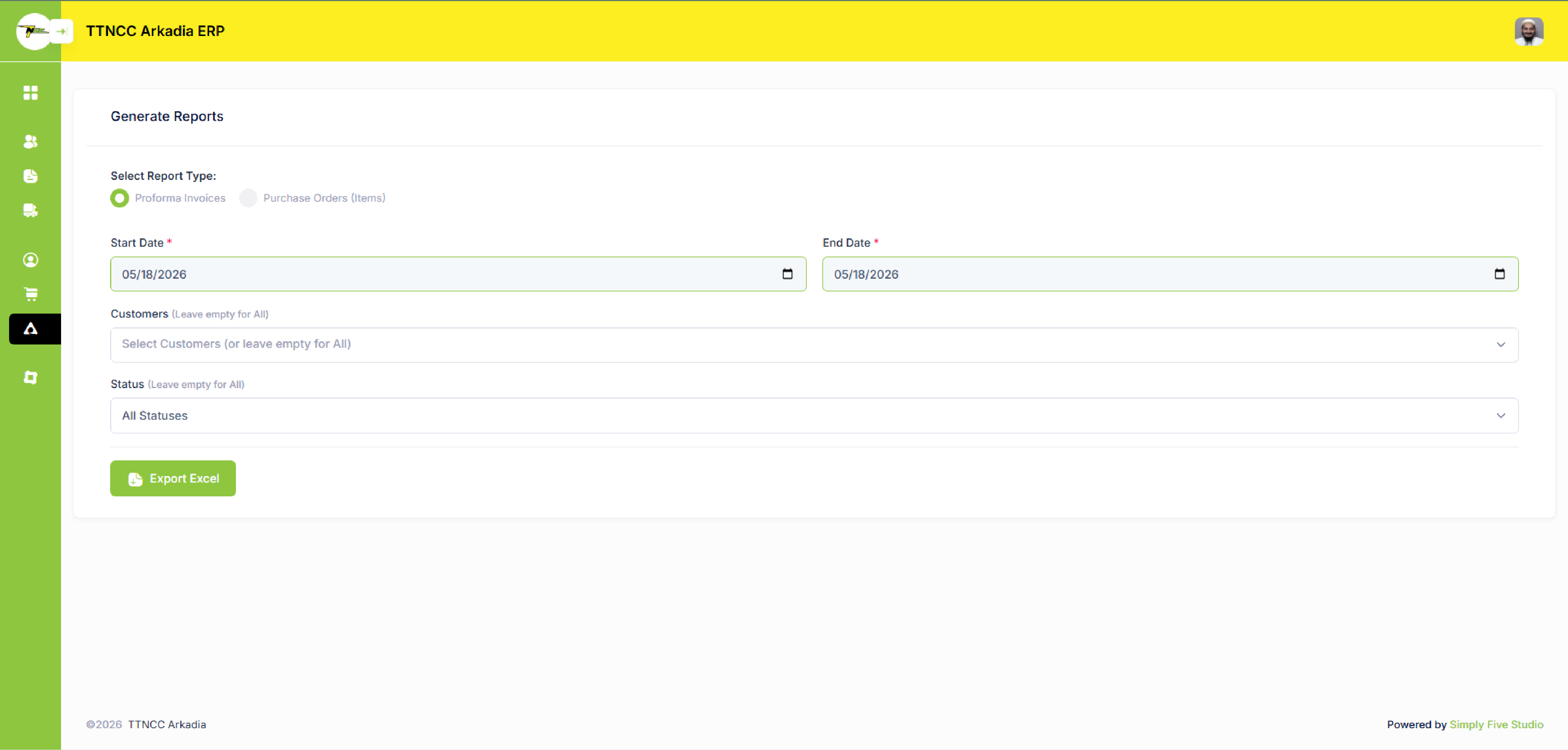
A custom showroom ERP from walk-in to proforma to vendor PO. Branded PDFs, WhatsApp share, and a barcoding rollout that will capture every customer journey.
Arkadia is the Tamil Nadu Ceramic Centre's premium showroom in Chennai. Their category, ceramic tiles and sanitaryware, is a considered purchase. Customers walk in. They browse. They take photos. They consult interior designers. They come back. They eventually choose. The showroom's job is to support that journey without losing track of any single visitor or any single product the visitor was interested in.
The challenge of running a premium showroom is the gap between the sophistication of the customer experience and the underlying operational machinery. The displays are beautiful. The catalogue is curated. The back office, until the work we did with them, was a combination of paper, WhatsApp, and the salesperson's memory.
Arkadia carries thousands of SKUs across multiple vendors. Tiles by finish, size, and series. Sanitaryware by configuration and brand. Accessories that pair with both. The customer-facing display is the showroom floor itself, which is large, navigable, and intentionally curated.
A typical walk-in browses, identifies items of interest, and asks the salesperson for prices and availability. The salesperson takes notes on which items the customer noticed. They prepare a proforma invoice that itemises the selection with product images, so the customer can show it to whoever else is involved in the decision (spouse, designer, contractor) without having to remember every product code. The proforma may go through several rounds of revision. When the customer commits, the showroom places vendor purchase orders for the selected items.
In the old workflow, each step required manual coordination. The proforma was assembled in a spreadsheet or word processor. Product images were pulled from the vendor catalogue by hand. Vendor POs were typed up after the fact, one vendor at a time, against the line items from the customer proforma. The salesperson had to remember which items on the proforma went to which vendor. Mistakes happened.
The founder's brief to us was specific: capture the walk-in journey properly, generate beautiful proformas with product images, and auto- create vendor POs from the customer proforma without manual re-entry. And, in the next phase, barcode the showroom so every customer journey could be captured by scanning rather than by memory.
A custom ERP designed around the operational reality of a premium showroom.
Every walk-in is captured at the point of first interaction. Contact details, interest area, designer or contractor involvement, the items they noticed. The customer record persists across visits. The next time they walk in, the team knows what they were looking at last time and what conversations have happened in between.
A proforma is assembled by selecting items from the catalogue. The system pulls product images, descriptions, prices, and stock status automatically. The PDF output is brand-correct, includes the product imagery the customer needs to make decisions outside the store, and itemises everything cleanly.
The proforma is sent by email and shared by WhatsApp directly from the system. The end-to-end email setup runs from the firm's own domain with proper sender authentication. The WhatsApp share creates a customer- visible artefact that can be forwarded, archived, and revisited.
When the customer confirms an order, the system parses the proforma line items by vendor and generates a purchase order to each vendor with the correct items. What was previously a manual sorting exercise (which of these tiles came from which supplier?) happens automatically. The salesperson confirms the POs, the system sends them to vendors with delivery requirements attached.
The catalogue lives inside the system. Adding a new product, updating a price, marking a SKU out of stock, all happen in one place and reflect immediately in proforma generation. The product master is the source of truth, which is the structural prerequisite for everything else the system does.
A customer walks into the showroom on a Saturday afternoon. The salesperson greets them, learns what they are looking for, and as they walk together through the displays, captures the items they pause on inside the system. A proforma takes shape in real time.
By the end of the visit, the customer leaves with a branded PDF proforma in their email and on their WhatsApp. They show it to their designer. The designer suggests three substitutions. The customer comes back the following weekend. The salesperson pulls up the same proforma, swaps the line items, regenerates the PDF, sends it again.
When the customer confirms, the salesperson converts the proforma to an order. The system breaks the line items out by vendor and generates the POs. Within minutes of the customer's commitment, the supply side of the order is in motion. Delivery is scheduled, the customer is notified, and the salesperson moves on to the next walk-in.
The accuracy of the proforma improved sharply. Manual selection of product images and prices, however careful, produces occasional errors. System selection does not.
The speed of the customer-facing turnaround improved as much. A customer who used to wait until the next day for an updated proforma now waits five minutes. The pace of the negotiation tightens. Decisions get made faster, which matters in a category where customer momentum can stall.
The vendor PO process became reliable in a way it had not been before. Where previously the salesperson had to remember which item came from which vendor and might occasionally miss one, the system does the sorting by construction. The downstream effect is that orders ship complete, which is the kind of operational reliability that compounds into customer satisfaction.
The active project is barcoding. Over 5,000 SKUs in the showroom are being assigned QR codes. Once complete, a customer walk-in journey will be captured by scanning. The salesperson can scan a tile the customer likes, and the item lands in their working proforma immediately. The proforma assembles itself as the customer moves through the showroom. Vendor POs auto-generate when the customer confirms.
This shifts the role of the salesperson from data entry to conversation. Their attention can stay on the customer. The system captures what the customer interacted with. The barcoding rollout will take some months to complete across the catalogue, and will be the biggest operational improvement to the firm's day-to-day rhythm since the original ERP went live.
The relationship is structured as a continuing technology partnership. The system evolves as the firm's operational needs evolve.
Three cutting-tool manufacturers in Mumbai outgrew Zoho. We built CFX, a custom multi-tenant ERP on AWS with a dedicated Android sales app and Gemini AI integration.
A highly custom ERP with AI capabilities to remove manual workflows from the operation. Modules for customer management, HR, online portal automation, and custom quotations.
A comprehensive ERP for an industrial manufacturer of custom anchor bolts, flanges, and heavy hardware. Quotes to work orders to invoicing, multi-vendor RFQ, vendor and customer dashboards.
Engagements begin with a conversation. Not a pitch. A direct discussion about your operations and the visibility you are missing.